

A CFII is a Certified Flight Instructor – Instrument: a flight instructor who also holds an instrument rating on their flight instructor certificate. That rating lets them teach students to fly by reference to instruments, in clouds and low visibility, and to sign off the instrument training the FAA requires for the instrument rating and the commercial certificate. For most instructors, it’s the next rating after the CFI, and one of the quickest to earn.
This guide explains what a CFII is, what the rating lets you do that a CFI can’t, the FAA requirements, the five steps to earn it, what the checkride tests, and why the rating matters if you’re building a flying career.
At a glance:
- What it is: an instrument rating added to the flight instructor certificate you already hold.
- What it allows: instrument training toward the instrument rating, the instrument training in commercial and ATP training, and instrument proficiency checks.
- Prerequisites: a commercial or ATP certificate with an instrument rating. Most applicants already hold a CFI.
- Tests: the FAA Flight Instructor Instrument (FII) knowledge test and a checkride under the Flight Instructor Instrument Practical Test Standards (FAA-S-8081-9E).
- Time at Choice: about 5 hours of flight training once you hold the CFI.
Table of Contents
What Is a CFII?
The FAA issues a flight instructor certificate with one or more ratings on it. A new instructor usually starts with an airplane single-engine rating, which makes them a CFI. Adding an instrument rating to that certificate makes them a CFII. The second “I” stands for instrument.
So an instrument instructor doesn’t hold a different certificate from a CFI. They hold the same flight instructor certificate with one more rating. The FAA treats it as an additional flight instructor rating under 14 CFR 61.191, and the eligibility rules in 14 CFR 61.183 list it by name: “a flight instructor certificate with an instrument rating.”
This matters because an instrument instructor teaches the hardest part of most pilots’ training. Instrument flying means controlling the airplane without looking outside, following air traffic control clearances, flying approaches to minimums, and handling equipment failures in cloud. The FAA requires that a specific kind of instructor teach it.
CFI vs. CFII: What the Instrument Rating Adds
A CFI without the instrument rating can teach a lot. They can take a student from the first lesson to the private pilot checkride, give flight reviews, and endorse solo flights. They can even teach basic attitude instrument flying, the hood work every private student does, under 14 CFR 61.195(l).
What a CFI can’t do is give the instrument training that counts toward an instrument rating. Section 61.195(c) reserves that work for instructors who hold an instrument rating on their flight instructor certificate. The same applies to the instrument training required for the commercial and airline transport pilot certificates.
| Task | CFI | CFII |
|---|---|---|
| Private pilot training, including basic instrument maneuvers | Yes | Yes |
| Solo and cross-country endorsements | Yes | Yes |
| Flight reviews | Yes | Yes |
| Instrument training toward an instrument rating | No | Yes |
| Instrument training required for commercial and ATP | No | Yes |
| Instrument proficiency checks (IPC) | No | Yes |
| Instrument training in a multi-engine airplane | No | Yes, if also an MEI |
Here’s what that means in practice. An instrument student needs 40 hours of actual or simulated instrument time, and 14 CFR 61.65(d) requires 15 of those hours from an instructor who holds an instrument-airplane rating. Only an instructor with the instrument rating can give those hours, so every instrument student needs one.
CFII Requirements
These requirements come from the same rules that govern every flight instructor rating. To add the instrument rating to a flight instructor certificate, under 61.183 and 61.191 you must:
- Be at least 18 and read, speak, write, and understand English.
- Hold a commercial or airline transport pilot certificate with an instrument rating appropriate to the aircraft category.
- Log at least 15 hours as pilot in command in the category and class of aircraft for the rating.
- Receive and log ground training on the instrument rating knowledge areas (14 CFR 61.185(a)(3)).
- Pass the Flight Instructor Instrument (FII) knowledge test.
- Receive and log flight training on the instrument instructor areas of operation, with a logbook endorsement that you’re ready for the practical test (14 CFR 61.187).
- Pass the practical test with an examiner.
If you already hold a flight instructor certificate, you don’t retake the Fundamentals of Instructing (FOI) knowledge test. Section 61.191(b) waives it for an additional instructor rating. That’s one reason the instrument rating moves faster than the original CFI.
The spin training endorsement required for the airplane CFI doesn’t apply to the instrument rating. If you earned your CFI, you’ve already done it.
How to Become a CFII in 5 Steps
Most pilots add the instrument rating right after the CFI, while the teaching skills and instrument knowledge are both fresh. Here’s the order.
1. Hold the Prerequisites
You need a commercial pilot certificate with an instrument rating. In practice, nearly every applicant also holds a CFI, because the CFI is where you learn to teach. At Choice, students in the career program earn the private, instrument, and commercial certificates, then the CFI, then add the CFII and the multi-engine instructor rating (MEI).
2. Pass the FII Knowledge Test
The FII knowledge test covers the instrument rating knowledge areas at an instructor’s depth: regulations, weather, navigation systems, instrument approach procedures, ATC procedures, and aeromedical factors. The test is multiple choice, but the standard behind it is higher than for the instrument rating, because you’ll be the one explaining it.
Your instrument rating is the foundation. If it’s been a while since you flew IFR, review the instrument procedures and the current approach charts before you start.
3. Train with an Instrument Instructor and Get the Endorsement
The flight training covers the areas of operation listed in 61.187(b)(7):
- Fundamentals of instructing
- Technical subject areas
- Preflight preparation
- Preflight lesson on a maneuver to be performed in flight
- Air traffic control clearances and procedures
- Flight by reference to instruments
- Navigation aids
- Instrument approach procedures
- Emergency operations
- Postflight procedures
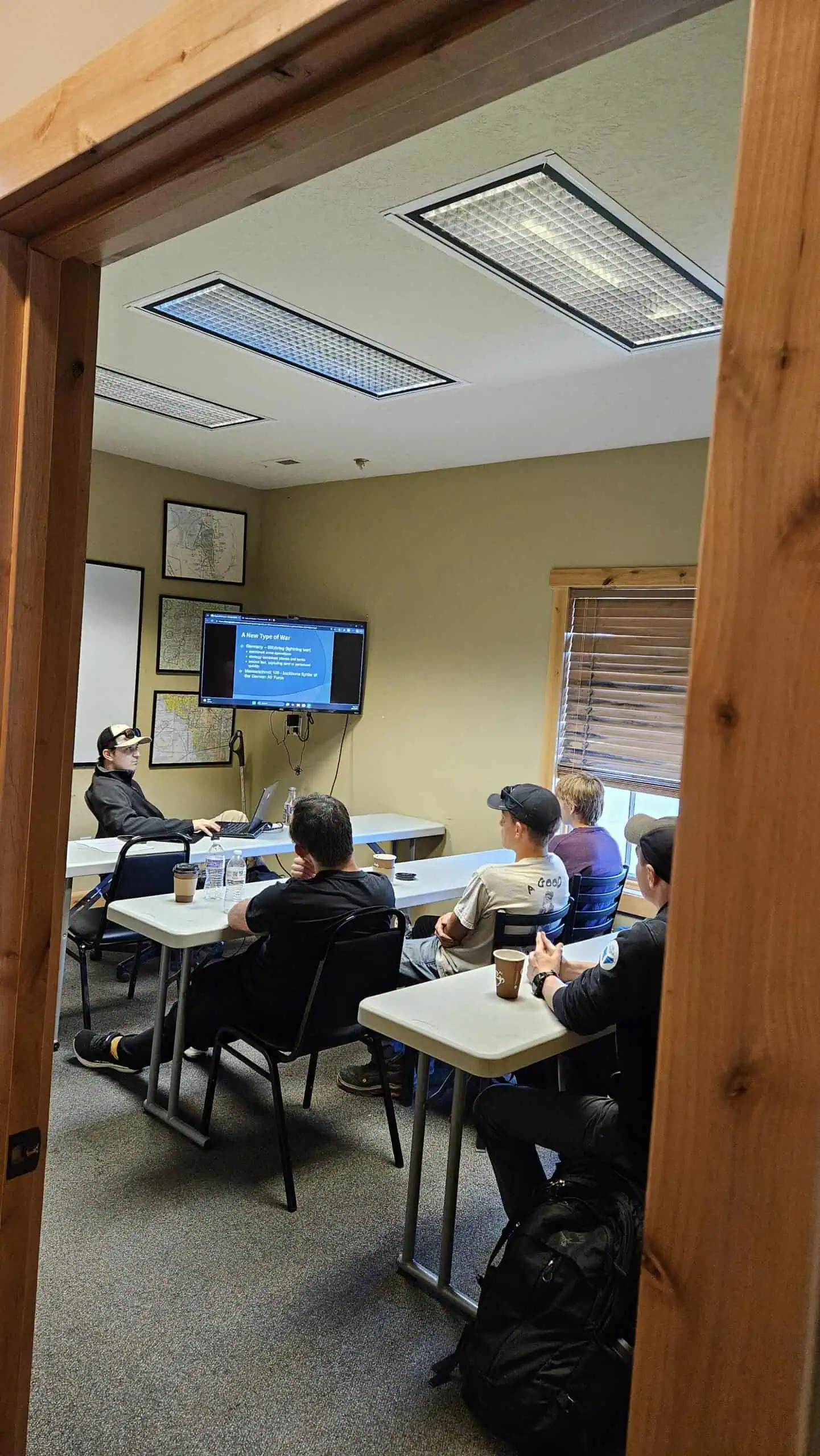
Most of this is teaching practice. You’ll fly approaches from the right seat while explaining them, call out a student’s errors, and talk someone through a partial panel failure. When your instructor signs the endorsement, you’re cleared to take the checkride.
4. Pass the Checkride
The checkride is an oral exam followed by a flight with an examiner. It follows the Flight Instructor Instrument Practical Test Standards for Airplane Rating and Helicopter Rating, FAA-S-8081-9E. The FAA lists it on its practical test standards page, effective May 31, 2024. More on what the examiner looks for below.
5. Keep Your Instructor Privileges Current
Flight instructor privileges depend on recent experience. Under 14 CFR 61.197, you must meet a recent experience requirement within each 24-calendar-month period to keep instructing. Passing a practical test for an additional instructor rating counts. So this checkride also resets your instructor recent experience period.
The CFII Checkride: What the Examiner Tests
One of the most common checkride questions is whether it uses an ACS or a PTS. As of 2026, the airplane test still uses a Practical Test Standard, FAA-S-8081-9E. The FAA has moved the private, instrument, commercial, and airplane CFI tests to Airman Certification Standards. For airplanes, the instrument instructor test hasn’t moved yet. Check the FAA standards page before your checkride, because the FAA updates these documents.
What makes this checkride different from the instrument checkride is who you’re performing for. On the instrument checkride, you show that you can fly to standard. On this one, you show that you can teach someone else to fly to standard. Expect the examiner to:
- Ask you to teach a lesson on the ground. Pick a topic such as holding entries or an approach briefing, and teach it as you would to a student.
- Play the student in the air. The examiner flies, makes mistakes, and watches whether you catch them, explain them, and correct them safely.
- Test your instrument knowledge in depth. Regulations, approach chart details, equipment requirements, and how you’d explain each one.
- Watch your judgment as pilot in command. The instructor stays responsible for the flight, even while a student is flying.
The right seat is the hard part for many applicants. Flying approaches from the right seat changes your scan and your view of the panel. Get comfortable flying approaches from the right seat well before the checkride.
How Long Does the CFII Take?
At Choice, the rating takes about 5 hours of flight training after the CFI, according to the career program’s estimates. Choice calls it a short add-on, completed in a short window. Add the time to study for and pass the FII knowledge test and to schedule the checkride.
The total from zero hours through the CFII runs about 238 hours at Choice: roughly 55 for the private, 50 for the instrument rating, 121 for the commercial single and multi-engine, 6 for the CFI, and 5 for the instrument instructor rating. Individual hours vary with currency, weather, and how often you fly. For the full timeline, see How Long Does It Take to Become a Pilot?
What slows it down is usually the same as what slows any rating down: gaps between flights, weather, and waiting for an examiner. Flying three times a week keeps each lesson building on the last one.
How Much Does a CFII Cost?
This rating is usually one of the less expensive ratings in a pilot career, because it takes few flight hours and you’ve already paid for the instrument rating behind it. Your total depends on how many hours you need to reach proficiency, the aircraft and simulator time, ground instruction, the knowledge test fee, and the examiner’s fee.
Choice sends a written cost breakdown on request, with aircraft, instruction, ground, exam, and checkride costs listed separately.
Why the CFII Matters for Your Career
Most pilots who earn the rating are building toward a professional flying job. The rating helps in several ways.
More Students and More Flying
A CFI-only instructor can’t give the instrument training that instrument and commercial students need. With the instrument rating, you can teach every student from the first lesson through the commercial instrument work. More students means a fuller schedule, and more flight hours toward the totals the airlines and charter operators hire on.
Instrument Proficiency Checks
Pilots who let their instrument currency lapse for more than six months need an instrument proficiency check (IPC) to fly IFR again. 14 CFR 61.57(d) allows an authorized instructor to give one, and 61.195(d)(6) says the instructor must test the pilot to that standard before signing it. IPCs come from rated pilots as well as students, which widens the work you can take on.
Your Own Instrument Flying Gets Sharper
Choice describes the rating as a short add-on that sharpens your own IFR flying as much as it expands what you can teach. Explaining an approach out loud, over and over, makes you precise about every step. That habit carries into the cockpit of a charter jet or an airliner.
A Step Toward Multi-Engine Instruction
Instrument training in a multi-engine airplane requires both an instrument rating and a multi-engine rating on your flight instructor certificate, under 61.195(c)(2). The two ratings together let you teach the multi-engine instrument work that commercial students need. At Choice, the MEI is taught in the Cessna 310. See Multi-Engine Rating: What It Takes for that path.

The Path to the Airlines
The airlines hire on total flight time, and most pilots build that time as instructors. An instrument instructor can teach more of the students on the schedule, and in more conditions, which helps keep the hours coming. Under 14 CFR 61.51(g), an instructor can also log instrument time when instructing in actual instrument conditions.
Earning Your CFII at Choice Aviation
Choice trains instructors in Cody, Wyoming, inside a working aviation operation. Charter aircraft leave from the same ramp, the maintenance shop is in the same hangar, and students see how the industry runs.

The path at Choice:
- The CFI first. Choice’s CFI course is a two-week accelerated ground school, about 50 hours of ground training in small groups, with fixed start dates. You present, get critiqued, and present again, so you leave with lesson plans you wrote. The FOI and FIA knowledge tests must be passed before day one.
- Then the CFII and MEI. Both are short add-ons after the CFI. The instrument rating takes about 5 hours of flight training at Choice. The MEI is taught in the Cessna 310 and needs 15 hours of multi-engine pilot-in-command time, which Choice can help you build.
- One school, start to finish. The career program runs from zero hours through CFI, CFII, and MEI without changing schools. It runs at an accelerated pace or around a job.
- Mountain flying as standard. Density altitude and terrain are part of everyday training at Choice.
- A job at the end. Choice hires CFIs, and graduates are considered first for openings on its instructor team. Several of the instructors on the ramp trained there.
CFII FAQ
What does CFII stand for?
CFII stands for Certified Flight Instructor – Instrument. It’s a flight instructor who holds an instrument rating on their flight instructor certificate, which allows them to give instrument training toward an instrument rating.
Is a CFII a rating or a certificate?
It’s a rating. An instrument instructor holds the same flight instructor certificate as a CFI, with an instrument rating added to it under 14 CFR 61.191.
Is the CFII checkride ACS or PTS?
For airplanes, it’s still a PTS. The airplane checkride follows the Flight Instructor Instrument Practical Test Standards, FAA-S-8081-9E, effective May 31, 2024. Check the FAA’s test standards page before your checkride in case it changes.
How long does it take to get a CFII?
At Choice, about 5 hours of flight training after the CFI, plus the FII knowledge test and the checkride. How long that takes on the calendar depends mostly on how often you fly.
Can you get a CFII before a CFI?
The regulations list a flight instructor certificate with an instrument rating as its own path, so it’s possible. You would then need to pass the Fundamentals of Instructing knowledge test as well. Most pilots, and Choice’s career program, earn the CFI first, because the CFI is where you learn to teach and it opens more work sooner.
Can a CFII give an instrument proficiency check?
Yes. 14 CFR 61.57(d) allows an authorized instructor to give an IPC, and the instructor must test the pilot to the IPC standard before endorsing the logbook.
Add the CFII at Choice
If you’re working toward a flying career, the CFII is one of the fastest ratings to earn and one of the most useful to hold. Choice teaches it as a short add-on to its accelerated CFI course, and hires instructors who train there.
See the CFI course and request details, or start from zero with the career program.

